Peptides for gut health: what BPC-157, KPV, thymosin alpha-1, LL-37 and collagen have actually been tested for

The short answer
BPC-157 is the most-discussed peptide for gut health, but its gut evidence is almost entirely rat studies. KPV and LL-37 have mouse colitis data, thymosin alpha-1 is a licensed drug for hepatitis rather than gut disease, and collagen has two small human studies: an uncontrolled pilot and a placebo-controlled exercise trial that found no effect. None has a published controlled trial showing benefit in a human gut condition.
Search for peptides for gut health and you get the same five names in the same breath: BPC-157, KPV, thymosin alpha-1, LL-37 and collagen. Protocol posts list them side by side, often as a stack, as if each one had the same kind of proof behind it. They do not. One is a licensed drug in other countries for a liver infection, one is a food supplement, and three are research compounds whose gut evidence comes from rodents. This page grades each one on what has actually been studied, starting with BPC-157 because it is the name most people mean when they ask about gut peptides.
What is the best peptide for gut health?
There is no peptide with proven benefit for a human gut condition, so “best” depends on what kind of evidence you count. BPC-157 has the largest body of gut-specific research, but nearly all of it is in rats (Bajramagic et al., 2024). Thymosin alpha-1 has the most human safety data, but from hepatitis and immune use, not gut disease (Dominari et al., 2020). Collagen is the only one with published human digestive studies: one pilot with no control group (Abrahams et al., 2022) and one small placebo-controlled trial that found no effect (Taylor et al., 2023). PeptideAgent’s BPC-157 vs KPV comparison finds the two most-marketed gut peptides tied on evidence grade and regulatory status, with neither proven in people.
The five gut-health peptides, graded on the evidence
The grades below describe the kind of evidence that exists for the gut specifically, in words, from the primary sources cited on this page. A strong animal record is still an animal record.
| Peptide | What it is | Gut evidence, in words | Best human evidence (any use) | Source |
|---|---|---|---|---|
| BPC-157 | Synthetic 15-amino-acid peptide based on a gastric-juice protein | Many rat studies (surgical joins, fistulas, colitis); no published human gut trial results | Three small pilot studies, none in the gut | Bajramagic 2024, McGuire 2025 |
| KPV | Three-amino-acid fragment of the hormone alpha-MSH | Cell studies and mouse colitis models; no human trial | None published | Dalmasso 2008 |
| Thymosin alpha-1 | 28-amino-acid thymus peptide; sold as the drug thymalfasin abroad | Mouse data on drug-induced colitis; no human gut trial | Approved in more than 35 countries for hepatitis B and C and as an immune enhancer | Dominari 2020, Renga 2020 |
| LL-37 | The human cathelicidin, an antimicrobial peptide the gut makes | Mouse studies of the body’s own cathelicidin in colitis; taking LL-37 for the gut has not been tested | Small topical trials in leg ulcers | Koon 2011, Grönberg 2014 |
| Collagen peptides | Hydrolyzed collagen sold as a food supplement | One small open-label pilot (no control group); one small controlled exercise trial with no effect | The same two studies | Abrahams 2022, Taylor 2023 |
BPC-157 for gut health: the most-studied name, still mostly rat data
BPC-157 leads every gut-peptide list for a reason: the gut is where its research is deepest. A 2024 review by researchers at the University of Zagreb catalogs rat experiments on intestinal anastomoses, the surgical joins made after part of the bowel is removed, along with colitis, short bowel and related complications (Bajramagic et al., 2024). The review’s own title says what kind of evidence this is: therapy “in rats”. It also mentions that BPC-157 went into phase II trials in ulcerative colitis, but it gives no efficacy results from them.
The human side is thin. A 2025 review of BPC-157 found only three published human pilot studies (knee injections, bladder instillations for interstitial cystitis, and an intravenous safety test in two healthy adults), none of them in the gut (McGuire et al., 2025). Its authors concluded that “until well-designed human trials are conducted and published, BPC-157 should not be recommended for clinical use in musculoskeletal medicine.”
Evidence level, in words: a large, consistent rat literature with almost no human data and no published human gut trial results. The full study-by-study breakdown, including oral versus injected routes, is in our deep dive on BPC-157 for gut health.
Does KPV help gut inflammation?
In mice, yes; in people, it has not been tested. KPV is the three-amino-acid tail (lysine, proline, valine) of the hormone alpha-MSH. The key gut study, published in Gastroenterology, found that KPV enters intestinal and immune cells through a transporter called PepT1, and that KPV added to drinking water reduced the severity of two chemically induced forms of colitis in mice (Dalmasso et al., 2008). In the DSS model it cut a tissue marker of inflammation (MPO activity) by about 50%, and in the TNBS model by about 30%.
The authors wrote that KPV “might be a new therapeutic agent for IBD”. That was a hypothesis about people, built on mouse data, and the human trial that would test it has not been published. Evidence level, in words: cell and mouse studies only. Our page on KPV and inflammation research covers the rest of the record, and our KPV capsules explainer covers the oral forms sold for the gut.
Does thymosin alpha-1 help the gut?
Thymosin alpha-1 is the only peptide on this list with a long human track record, but that record is not about the gut. Its synthetic form, thymalfasin, “is approved in more than 35 countries for the treatment of hepatitis B and C and as an immune enhancer in several other diseases,” according to a 2020 review, which also describes uses in sepsis, vaccine response and cancer care (Dominari et al., 2020).
The gut-specific evidence cited here is mouse work. A 2020 study found that thymosin alpha-1 protected mice from the colitis caused by immune checkpoint inhibitors, a class of cancer drugs, by switching on a tolerance pathway (IDO1) in the gut (Renga et al., 2020). That is a specific drug side effect in mice, not IBS, IBD or “leaky gut” in people. Evidence level, in words: strong human data for liver infection and immune uses, animal data only for the gut. See our page on thymosin alpha-1 and immune modulation.
Does LL-37 help gut health?
Your gut already makes LL-37, and that is most of what is known. LL-37 is the human form of cathelicidin, an antimicrobial peptide released at surfaces such as skin, airway and gut. In a 2011 study, mice bred without their version of cathelicidin developed more severe chemically induced colitis than normal mice, and the authors concluded that “cathelicidin protects against colitis induction in mice” (Koon et al., 2011). The same paper notes that LL-37 gene expression is higher in colon biopsies from people with ulcerative colitis.
That is evidence about the body’s own peptide, not about taking it. The human trials of LL-37 as a treatment were topical: a 34-person trial in hard-to-heal venous leg ulcers found faster healing at the two lower doses and “no safety concerns regarding local or systemic adverse events” (Grönberg et al., 2014). A later 148-patient leg-ulcer trial found no significant improvement in healing across its full study population (Mahlapuu et al., 2021), as covered on our LL-37 explainer. Evidence level, in words: mouse studies of the natural peptide, small topical human trials, nothing on taking it for the gut.
Are collagen peptides good for gut health?
Collagen peptides are the odd one out: a food supplement made by breaking down collagen, not a research peptide. They are also the only compound in this group with published human digestive studies. In a 2022 pilot, women with mild digestive symptoms took a daily collagen peptide supplement for 8 weeks, and 13 of the 14 who finished reported fewer symptoms, including bloating (Abrahams et al., 2022).
Read the design before the headline. The study was single-arm and open-label, so everyone knew they were taking collagen and there was no comparison group; only 14 of 40 recruited participants completed it; and one author was affiliated with Rousselot, the maker of the brand tested. The authors themselves wrote that the study “was neither randomized nor blinded” and that “the findings should be interpreted with caution.” A second study took a different angle. In a small randomized, placebo-controlled crossover trial, 20 volunteers (16 of them men) took collagen peptides for a week before a hard run, and collagen made no difference to a gut permeability test or to GI symptoms compared with placebo (Taylor et al., 2023). Evidence level, in words: one small, uncontrolled pilot with positive self-reports and one small controlled trial with no effect.
Are there peptides for gut repair or gut healing?
The repair claims trace back almost entirely to BPC-157’s rat studies of healing fistulas and surgical joins (Bajramagic et al., 2024). KPV, thymosin alpha-1 and LL-37 are discussed more for inflammation than for repair, and their gut data are also from mice. No peptide has been shown in a controlled human trial to repair the gut lining, and “leaky gut” itself is a looser idea online than in the research; our explainer on what leaky gut is separates the measurable part from the marketing.
What are the side effects of gut-health peptides?
For most of this list, side effects in people are simply unmeasured. The 2025 BPC-157 review found no adverse effects reported in its three small human studies, but stressed that “there is also limited data regarding safety and associated side effects” (McGuire et al., 2025). KPV has no published human safety data at all.
Thymosin alpha-1 is the exception, with “well-studied safety profiles” and mostly minor side effects in clinical use; the same review notes it is contraindicated in people on immune suppression, such as organ transplant recipients, unless the benefit outweighs the risk (Dominari et al., 2020). That caution matters for anyone with IBD on immune-suppressing medicine. Topical LL-37 raised no safety concerns in its leg-ulcer trial (Grönberg et al., 2014), which says nothing about swallowing or injecting it.
Can gut peptides be stacked?
People do stack them, but no study has tested any of these combinations for the gut. Online, some posters describe stacking KPV with BPC-157, TB-500 and GHK, and thymosin alpha-1 users disagree about whether it can be mixed with other peptides at all (Community Insights summaries for KPV and thymosin alpha-1, July 2026). Every study cited on this page tested one compound on its own, so the effect of a combination, good or bad, is unknown.
| Attribute | Main gut claim | Gut studies in | Human safety data |
|---|---|---|---|
| BPC-157 | Repair and healing | Rats | Three small pilots |
| KPV | Inflammation | Cells and mice | None published |
| Thymosin alpha-1 | Immune balance | Mice | Extensive, outside the gut |
| LL-37 | Antimicrobial defense | Mice | Small topical trials |
| Collagen | Bloating and digestion | Two small human studies | Small studies only |
What does peptide therapy for gut health cost?
Cost tracks the category more than the evidence. Collagen is sold as an ordinary food supplement, the product in its only digestive study was a commercial brand (Abrahams et al., 2022), and it needs no prescription. BPC-157 and thymosin alpha-1 are sold by some telehealth providers as compounded prescriptions, which adds a consultation to the price of the peptide itself. The useful question before paying for any of them is the one this page asks: what was the evidence, in which species, for which condition.
What are people saying about gut-health peptides?
The online conversation runs well ahead of the research. Our Community Insights summaries, drawn from public X posts in July 2026, show the pattern clearly; they are anecdotes, not evidence.
- BPC-157 as the “gut repair” peptide. In 16 posts from July 16 to 20, people most often described taking oral BPC-157 to repair the gut lining or address leaky gut, pointing to its origin in a gastric-juice protein. Others raised a contested cancer-risk concern tied to its blood-vessel signaling.
- KPV as a stack ingredient. In 8 posts from July 18 to 20, KPV appeared as one part of stacks with BPC-157, TB-500 and GHK, and in discussion of the July 2026 compounding committee meeting, which several posters stressed was about access, not proof that it works.
- Thymosin alpha-1 for colds, not the gut. In 13 posts from July 9 to 16, a few users credited it with avoiding colds and illness, which is an immune claim rather than a gut one.
- LL-37 in cheatsheets. In 13 posts from July 10 to 14, LL-37 mostly appeared in peptide lists and in discussions linking vitamin D to the body’s own antimicrobial peptides.
What this means if a gut condition is your concern
If you have reflux, IBS, IBD or persistent bloating, the evidence on this page is a reason to talk to a clinician, not a protocol. Four of the five compounds have gut data only from animals, the fifth has two small human studies (one uncontrolled, one that found no effect), and none has been tested in combination. A gastroenterologist can set that against treatments with human trial evidence for your condition. Our list of questions to ask your doctor about peptides is a practical place to start.
BPC-157 status: Not FDA-approved; sold by some telehealth providers as a compounded prescription. An FDA advisory committee reportedly voted in July 2026 to recommend allowing pharmacies to compound it; nothing has changed yet. What these status terms mean.
Educational information only, not medical advice. Every research statement on this page is sourced to the primary literature linked above, read on October 12, 2026; community themes come from our Community Insights summaries of public X posts from July 2026. The status line refers to BPC-157 and reflects the network status page as of October 12, 2026. This page is drafted with AI assistance and fact-checked against the cited primary sources before publication.
Sources (10)
Advertising disclosure: links marked "Paid link" go to Bodybuilding Peptides (trybbpeptides.com), an affiliate destination, and Gut & Immune may earn a commission if you buy there. Our coverage is independent of that relationship, and nothing on this page is medical or legal advice.
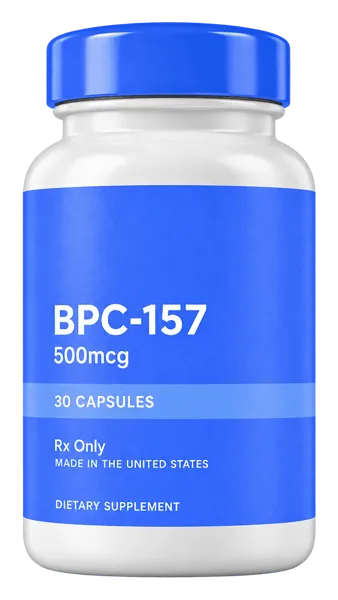 See it at Bodybuilding Peptides