Fibermaxxing took over gut TikTok. Here is what the fiber studies actually support
The short answer
Fibermaxxing is the social media habit of eating as much fiber as possible, usually from beans, seeds, oats and fruit. The core idea holds up: most Americans fall short of fiber targets, and higher intakes track with lower disease risk. The overshoots are promises of a fast microbiome makeover, a gut 'detox', and the idea that more is always better.
Gut Protocol Claims Review, issue 1. Dated October 12, 2026. Trend window: July 2025 to October 2026, as covered by CNN, Mayo Clinic Press and NPR. Evidence checked against the peer-reviewed sources linked on this page.
Every few months gut-health social media crowns a new habit. This time it is fibermaxxing: piling beans, chia, berries and oats into every meal to hit, or blow past, the daily fiber target. Unlike most viral gut protocols, this one starts from a real gap in how people eat. The question for this issue is narrower: which of the claims riding on the trend do the fiber and microbiome studies support, and where does the enthusiasm run ahead of the data?
What is fibermaxxing?
Fibermaxxing means deliberately eating as much dietary fiber as you can, aiming to meet or exceed the daily recommendation, mostly from whole plant foods. A Mayo Clinic lead dietitian, Tara Schmidt, describes it to Mayo Clinic Press as trying to max out daily fiber intake, at least meeting and more likely exceeding the recommendation, and says influencers often do it through plant challenges such as eating 30 or 50 different plants in a week (Mayo Clinic Press, 2026). The “-maxxing” suffix borrows from online slang for optimizing one variable as hard as possible.
Where did the fibermaxxing trend come from?
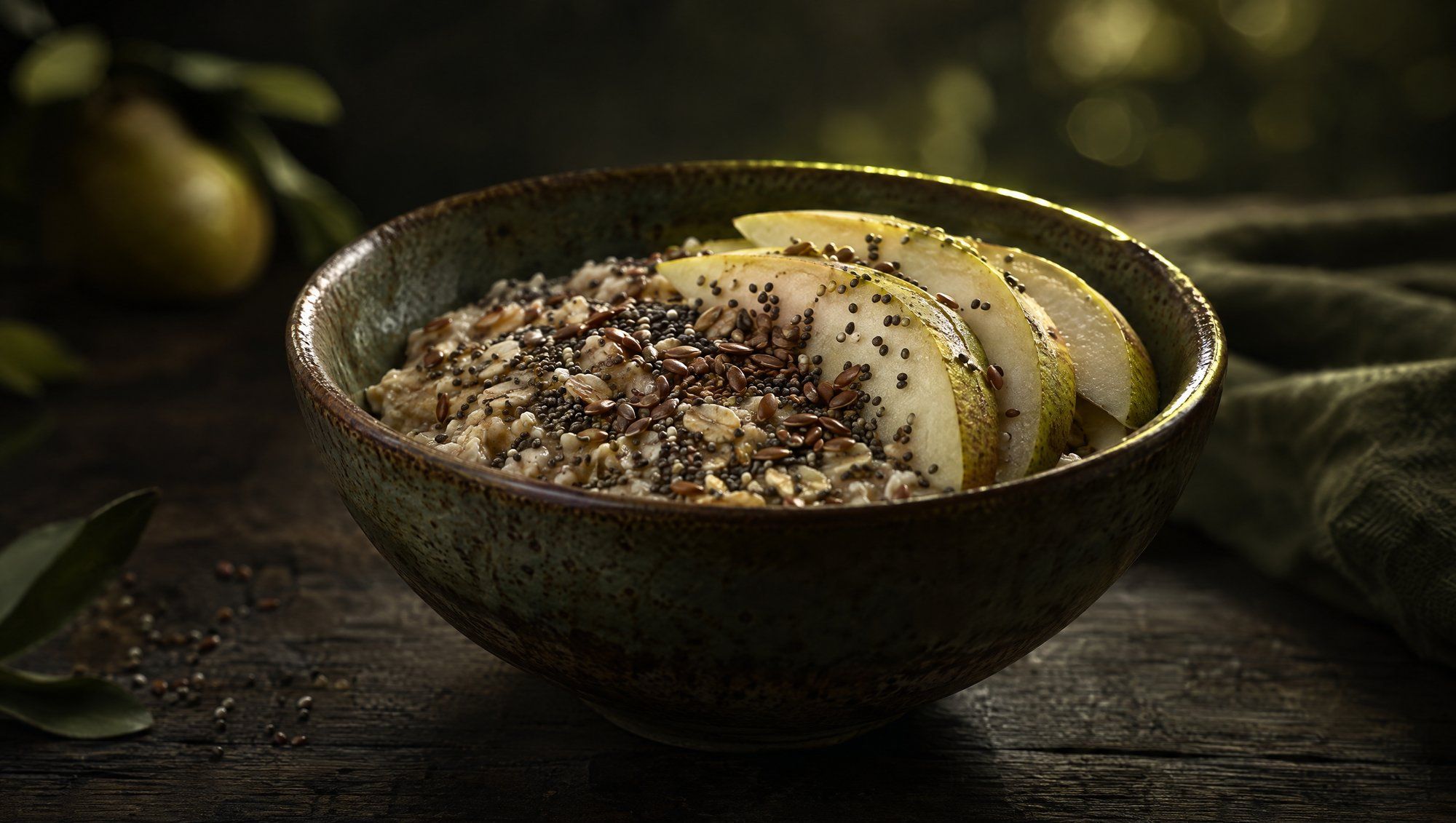
The hashtag spread on TikTok in mid-2025. CNN reported in July 2025 that videos tagged #fibermaxxing had gathered tens of millions of views and likes, often showing breakfast bowls of chia seeds and berries; the creator CNN profiled credited the habit with making her bloating disappear, and some TikTokers claimed it can “detoxify” the gut (CNN, 2025). The trend has outlasted the usual viral cycle: Mayo Clinic Press covered it in February 2026, and NPR reported in May 2026 that TikTok still carried many fiber-tips videos, including some posted by health professionals (NPR, 2026).
What makes it different from most gut trends this site reviews is the direction of the advice. Detox teas and multi-week “gut resets” ask people to add a product. Fibermaxxing mostly asks them to eat more beans, whole grains, fruit and vegetables, which is closer to standard dietary guidance than to a protocol.
What are the health benefits of fiber? The strongest evidence
The best evidence for fiber is long-term disease risk, and it is moderately strong. The largest synthesis, a 2019 series of systematic reviews and meta-analyses funded in part by the WHO and published in The Lancet, pooled 185 prospective studies (just under 135 million person-years) and 58 clinical trials with 4,635 adults (Reynolds et al., 2019). It found:
- Observational data: a 15 to 30% lower risk of all-cause and cardiovascular death, coronary heart disease, stroke, type 2 diabetes and colorectal cancer in the highest fiber eaters compared with the lowest.
- Trial data: lower body weight, systolic blood pressure and total cholesterol with higher fiber intakes.
- The sweet spot it measured: risk reduction across a range of critical outcomes was greatest at 25 to 29 grams of fiber a day, and dose-response curves suggested higher intakes could add further protection against cardiovascular disease, type 2 diabetes and colorectal and breast cancer.
The authors graded the certainty of evidence for fiber as moderate and noted their findings apply to the general population rather than people with chronic disease. So the plain version is: eating more fiber is one of the better-supported diet changes in nutrition science, mostly on observational data backed by short trials on risk factors.
The second reason the trend has a point is how far most people fall short. A 2017 summary in the American Journal of Lifestyle Medicine estimated that about 95% of American adults and children do not eat the recommended amount, with mean intake around 16 grams a day in 2009 to 2010 national survey data, against an adequate intake of 14 grams per 1,000 calories (roughly 25 grams for women and 38 grams for men aged 19 to 50) (Quagliani and Felt-Gunderson, 2017). The paper came out of a Kellogg-funded summit: one author is a Kellogg Company employee and the other was paid by Kellogg to write it, which is worth knowing, but the intake figures come from federal survey data.
Does fibermaxxing improve your gut microbiome?
It changes some gut bacteria, but the “more diverse microbiome” promise is where the trend overshoots most. A 2018 meta-analysis of 64 randomized trials in 2,099 healthy adults found that fiber interventions raised fecal Bifidobacterium and Lactobacillus and modestly raised butyrate, but did not change alpha diversity, the overall richness measure most often cited online (So et al., 2018). The effects were strongest for specific fibers (fructans and galacto-oligosaccharides), not for fiber in general.
The most-cited head-to-head test points the same way. In a Stanford randomized trial (18 healthy adults per arm), a high-fiber diet built from legumes, seeds, whole grains, nuts, vegetables and fruit increased the microbiome’s fiber-digesting enzymes but left community diversity stable, while a high-fermented-food diet steadily increased diversity and lowered inflammatory markers (Wastyk et al., 2021). Senior author Erica Sonnenburg told Stanford Medicine the data suggest more fiber over a short period is “insufficient to increase microbiota diversity” (Stanford Medicine, 2021). The same release notes that extra fiber showed up as more carbohydrate in stool, a sign the participants’ microbes could not fully break it down.
None of this means fiber is bad for the microbiome; it means a few weeks of fibermaxxing is unlikely to deliver the visible “microbiome reset” the videos imply, and a short trial cannot speak to what decades of a high-fiber diet do.
Is more fiber always better?
Not for everyone, and the studies do not support unlimited escalation as a goal in itself. The Lancet analysis found the clearest benefits at 25 to 29 grams a day, with dose-response curves hinting at more benefit above that (Reynolds et al., 2019). That supports getting to and somewhat past the target. It does not establish that 60 or 70 grams beats 35.
For some people, more fiber can make things worse. In a Singapore colorectal clinic study of 63 people with idiopathic constipation, those who stopped or cut back on fiber had more frequent bowel movements and less bloating at six months, while the small group who stayed on a high-fiber diet saw no change and all reported bloating and straining (Ho et al., 2012). Patients chose their own diet rather than being randomized, so this is weak evidence, but it is a useful counterweight to the idea that fiber fixes every gut complaint.
What are the side effects of fibermaxxing?
Gas, bloating and abdominal discomfort are the predictable side effects, especially when intake jumps quickly. In a 2022 meta-analysis of 16 randomized trials (1,251 adults with chronic constipation), fiber supplements improved response rates, stool frequency and consistency, but flatulence was clearly higher in the fiber groups (van der Schoot et al., 2022). The American College of Gastroenterology’s IBS guideline explains why: fibers that ferment in the colon lose their water-holding capacity and produce gas that can aggravate bloating and flatulence (Lacy et al., ACG guideline, 2021).
Mayo Clinic’s dietitian advises increasing fiber gradually over weeks, drinking more fluid as intake rises to avoid constipation, and checking with a clinician first if you have diverticulitis, IBS or a history of bowel obstruction (Mayo Clinic Press, 2026). She also warns against fixating on fiber at the expense of protein, calcium and healthy fats.
Is fibermaxxing a good idea if you have IBS?
It depends on the type of fiber, and the trend rarely makes that distinction. The ACG guideline suggests soluble but not insoluble fiber for global IBS symptoms (a strong recommendation on moderate-quality evidence). In the evidence it reviews, ispaghula (psyllium) husk helped IBS symptoms, while wheat bran did not (Lacy et al., ACG guideline, 2021). The guideline lists psyllium, oat bran, barley and beans as soluble-fiber sources, while Mayo Clinic Press lists whole grains, nuts, seeds and many vegetables as common insoluble-fiber sources, so an IBS sufferer copying a bowl built mostly from the second group may not get the type of fiber the guideline favors.
If gut symptoms are what sent you looking at fiber, it helps to know what is actually measurable. Our explainer on what leaky gut is and how much of the online version is real covers where fiber and other nutrients fit in the gut-barrier research, and BPC-157 for IBS and IBD: what the evidence shows sets out how thin the evidence is behind the peptide protocols that circulate in the same IBS communities.
Fiber supplements vs whole foods: does the source matter?
For constipation, supplements have the clearer trial record; for overall health, whole foods carry more of the evidence. The constipation meta-analysis found psyllium, doses above 10 grams a day and at least four weeks of use worked best, while cautioning that the trials varied widely (van der Schoot et al., 2022). The Lancet analysis, by contrast, deliberately excluded trials involving supplements, so its disease-risk findings describe fiber from food (Reynolds et al., 2019). Mayo Clinic’s dietitian makes the same practical point: supplements, gummies and drink mixes add fiber but not the rest of the nutrition in fruit, vegetables, whole grains and beans. On cost, the whole-food version of the trend is built from ordinary groceries, while supplements are an extra, ongoing purchase.
Fibermaxxing claims vs the evidence
The table below sets the trend’s most repeated claims against the studies covered in this issue. Three claims hold up, two are overstated, one depends on the kind of fiber, and one has no study on this page behind it.
| Attribute | Evidence level | What the studies show | Verdict |
|---|---|---|---|
| Most people do not eat enough fiber | National survey data | About 95% of Americans fall short; mean intake about 16 g a day | Supported |
| More fiber lowers long-term disease risk | Moderate (large cohort meta-analyses plus short trials) | 15 to 30% lower risk of heart disease, diabetes, colorectal cancer and early death in the highest eaters | Supported |
| Fiber helps you stay regular | Meta-analysis of randomized trials | Supplements, especially psyllium above 10 g a day, improved constipation | Supported, with more gas |
| Fibermaxxing makes your microbiome more diverse | Randomized trials in healthy adults | Raises specific bacteria such as Bifidobacterium, but did not change overall diversity | Overstated |
| Fiber detoxes your gut | No study identified | No trial on this page measures a detox effect | Not supported |
| The more fiber the better, for everyone | Mixed | Clearest benefit at 25 to 29 g a day; some constipated patients improved on less fiber | Overstated |
| Any fiber helps IBS | Clinical guideline, moderate-quality evidence | Soluble fiber such as psyllium helps; wheat bran did not | Depends on fiber type |
What is the community actually saying?
The online conversation is mostly enthusiastic and food-first: colorful bowls, plant-count challenges and personal reports of less bloating, as described in the CNN, Mayo Clinic Press and NPR coverage linked above. Notably, much of the pushback comes from clinicians and dietitians who like the trend but add the same two cautions, go slowly and drink more water. Our Community Insights data does not yet cover dietary fiber, so this issue does not quote or count individual posts; those reports are personal experience, not measurements, and the “less bloating” claims in particular sit awkwardly next to trial data showing more gas on fiber. Readers following broader chronic-condition trends can see how other self-directed gut and immune protocols stack up in peptides and chronic conditions in 2026.
The bottom line on fibermaxxing
As viral gut trends go, fibermaxxing is one of the better ones: the core advice, eat more beans, whole grains, fruit and vegetables, lines up with moderately strong evidence on long-term disease risk and with a real national shortfall. Where it overshoots is in the extras: a quick microbiome diversity boost the trials did not find, a “detox” none of these studies measures, and an implied rule that more is always better that the evidence does not support for everyone. Build up over weeks, favor whole foods, drink enough fluid, and if you have IBS, diverticular disease or a history of bowel obstruction, talk to a clinician about which fibers suit you before maxxing anything.
Educational information only, not medical advice. Every research statement on this page is sourced to the peer-reviewed literature, clinical guideline or named outlet linked above, checked October 12, 2026. This page is drafted with AI assistance and fact-checked against the cited sources before publication.
Sources (11)
Advertising disclosure: links marked "Paid link" go to Bodybuilding Peptides (trybbpeptides.com), an affiliate destination, and Gut & Immune may earn a commission if you buy there. Our coverage is independent of that relationship, and nothing on this page is medical or legal advice.